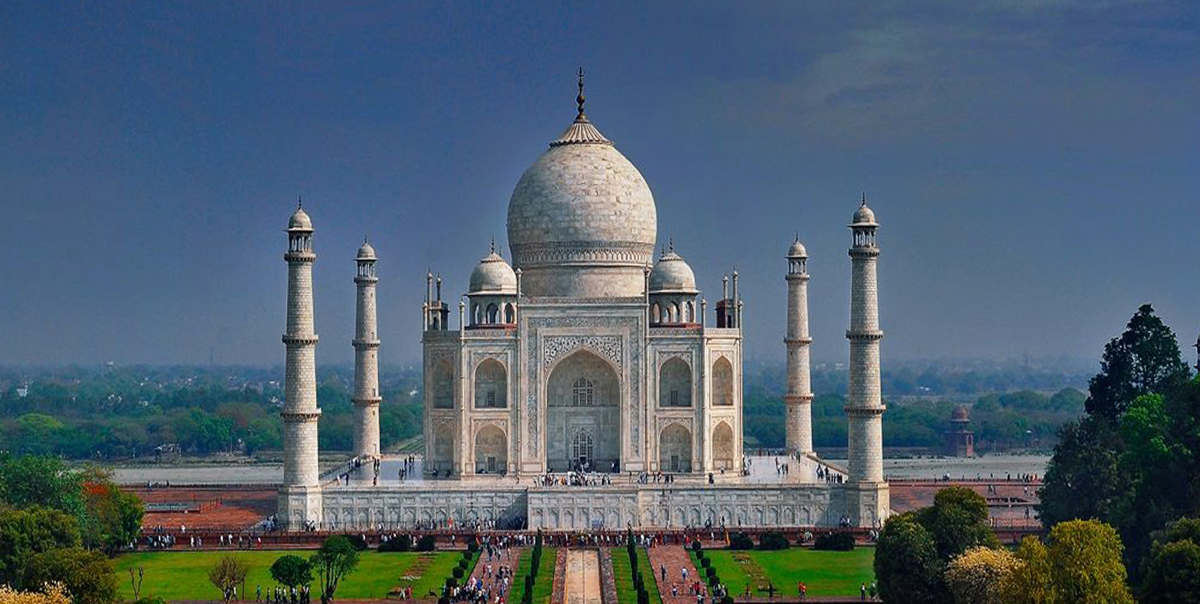
The Taj Mahal, standing gracefully on the banks of the Yamuna River in Agra, is one of the most admired monuments in the world. Known for its breathtaking white marble beauty, the Taj Mahal is not just an architectural wonder but also a powerful symbol of eternal love. Its history is deeply rooted in the Mughal era and continues to fascinate travelers from across the globe.
The Origin of the Taj Mahal
The Taj Mahal was commissioned in 1632 by the Mughal Emperor Shah Jahan in memory of his beloved wife Mumtaz Mahal. Mumtaz Mahal passed away while giving birth to their 14th child, leaving Shah Jahan devastated. To honor her love and legacy, the emperor decided to build a mausoleum unlike anything the world had ever seen.
Construction of the Taj Mahal took approximately 22 years, finally completing in 1653. More than 20,000 artisans, craftsmen, and laborers from India, Persia, Turkey, and Central Asia worked together to bring Shah Jahan’s vision to life.
Architectural Brilliance of the Taj Mahal
The Taj Mahal is a masterpiece of Mughal architecture, combining elements of Islamic, Persian, and Indian design. Built entirely of white marble brought from Makrana, Rajasthan, the monument changes its color with the light of the day—appearing pinkish at dawn, milky white during the day, and golden under moonlight.
Key architectural features include:
- A perfectly symmetrical design
- The large central dome surrounded by four smaller domes
- Four elegant minarets standing slightly outward for structural safety
- Intricate marble inlay work using precious and semi-precious stones
Verses from the Holy Quran are beautifully inscribed on the entrance gates and walls, enhancing the monument’s spiritual significance.
The Gardens and Layout
The Taj Mahal complex follows the Charbagh garden layout, symbolizing paradise as described in Islamic traditions. The gardens are divided into four equal parts with water channels reflecting the monument, creating a stunning visual symmetry.
Behind the Taj Mahal flows the Yamuna River, which played an essential role in transporting materials during construction and also contributes to the monument’s serene backdrop.
Shah Jahan and Mumtaz Mahal’s Tomb
Inside the main mausoleum lie the cenotaphs of Mumtaz Mahal and Shah Jahan. While Mumtaz’s tomb is perfectly centered, Shah Jahan’s cenotaph was later added beside her, slightly breaking the symmetry—symbolizing that even in death, his place was next to his beloved.
The actual graves are located in a lower chamber, kept simple in accordance with Islamic traditions.
Legends and Myths
Many legends surround the Taj Mahal. One popular myth suggests that Shah Jahan planned to build a Black Taj Mahal across the river for himself, though no historical evidence supports this claim. Another story claims that the artisans’ hands were cut off to prevent them from recreating such beauty—this too is a myth with no factual proof.
UNESCO World Heritage Status
In 1983, the Taj Mahal was declared a UNESCO World Heritage Site, recognizing its cultural and historical importance. Today, it is also listed among the Seven Wonders of the World, attracting millions of visitors every year.
The Taj Mahal Today
The Taj Mahal remains a symbol of India’s rich heritage and a global icon of love. Continuous conservation efforts are made to protect it from pollution and environmental damage, ensuring that future generations can continue to admire its beauty.
Conclusion
The history of the Taj Mahal is a story of love, loss, and artistic excellence. More than just a monument, it is an emotion carved in marble—a timeless reminder that true love can transcend time and mortality. A visit to the Taj Mahal is not merely sightseeing; it is an experience that connects you to centuries of history and romance.
