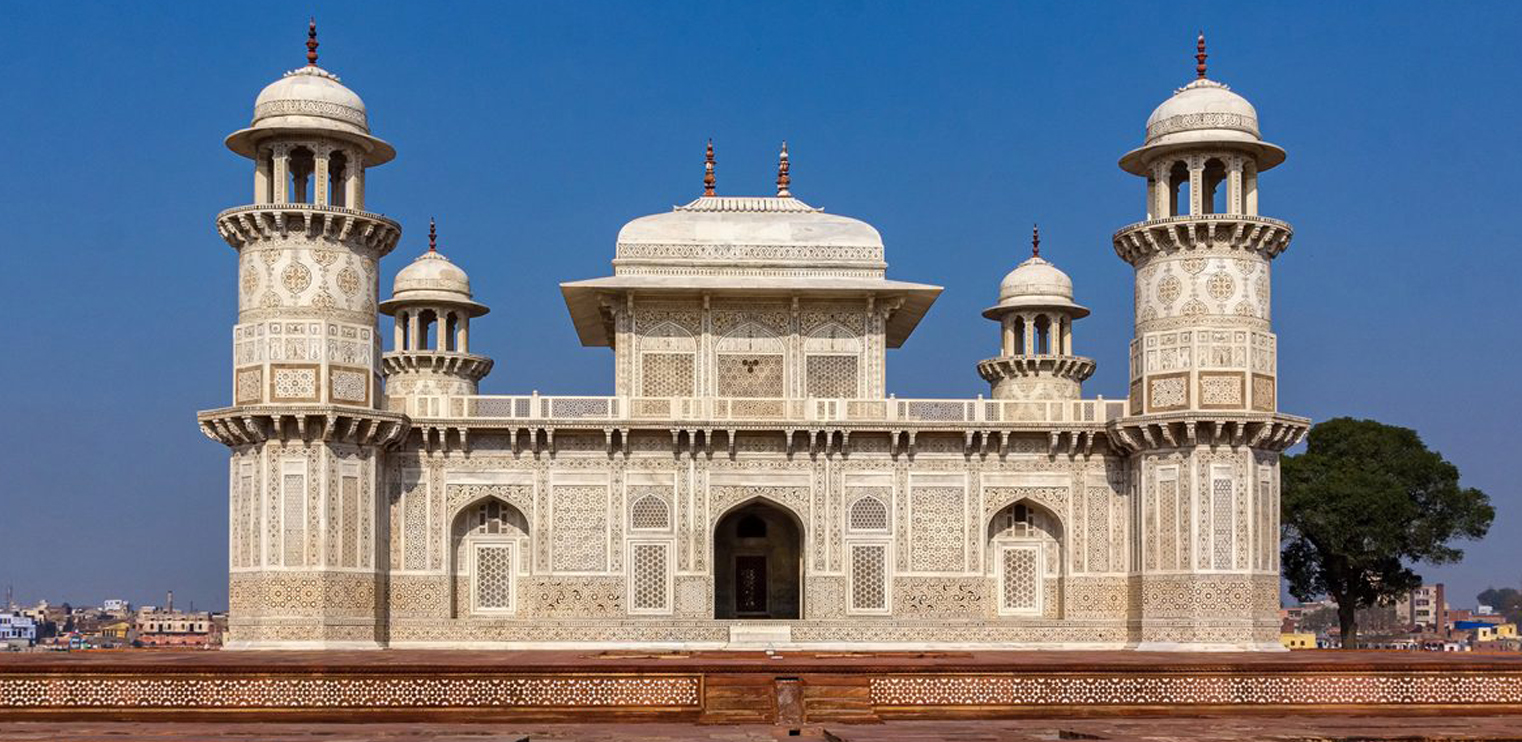
Often called the “Baby Taj,” the Tomb of Itimad-ud-Daulah is one of Agra’s most elegant and underrated monuments. Though smaller in size than the Taj Mahal, this exquisite mausoleum holds immense historical and architectural significance. Built before the Taj Mahal, it is widely regarded as the inspiration behind the world-famous monument.
History of the Baby Taj
The Baby Taj was constructed between 1622 and 1628 by Empress Nur Jahan, the wife of Mughal Emperor Jahangir. The tomb was built in memory of her father, Mirza Ghiyas Beg, who was honored with the title Itimad-ud-Daulah, meaning “Pillar of the State.”
Mirza Ghiyas Beg was a Persian noble who rose to prominence in the Mughal court due to his administrative skills. The construction of this tomb reflects Nur Jahan’s refined taste, power, and influence during the Mughal era.
Why It Is Called the “Baby Taj”
The monument earned the nickname “Baby Taj” because of its close resemblance to the Taj Mahal. Although smaller, it shares many design features such as:
- White marble construction
- Symmetrical layout
- Decorative inlay work
Since it predates the Taj Mahal, historians believe it played a crucial role in shaping Mughal funerary architecture.
Architectural Beauty of Itimad-ud-Daulah
The Baby Taj marks a major transition in Mughal architecture, moving away from red sandstone toward pure white marble. The tomb is renowned for its delicate craftsmanship and fine detailing.
Key architectural highlights include:
- Pietra dura (marble inlay) using semi-precious stones like jasper, lapis lazuli, onyx, and topaz
- Intricate jali (lattice) screens allowing soft light and airflow
- Four corner towers instead of traditional minarets
- Persian-style garden layout surrounding the monument
Unlike the Taj Mahal’s grandeur, the Baby Taj captivates visitors with its intimacy and artistic finesse.
Interior and Design Details
The interior of the Baby Taj is richly decorated with floral motifs, geometric patterns, and colorful inlay work. The cenotaphs of Itimad-ud-Daulah and his wife rest in the central chamber, while their actual graves are placed in the lower level.
The craftsmanship inside reflects the height of Mughal artistry during Jahangir’s reign.
Location and Surroundings
The Baby Taj is located on the eastern bank of the Yamuna River, opposite the Taj Mahal. The peaceful gardens and riverside setting make it an ideal spot for photography and quiet exploration, away from the crowds.
UNESCO World Heritage Status
The Tomb of Itimad-ud-Daulah is part of the UNESCO World Heritage Site under the Agra Fort and Taj Mahal complex, recognized for its historical and architectural value.
Baby Taj Today
Today, the Baby Taj is a must-visit attraction for travelers who want to explore Agra beyond the Taj Mahal. Its calm atmosphere, fine details, and historical importance make it a favorite among history enthusiasts and photographers.
Conclusion
The Baby Taj may be small in size, but it holds a monumental place in Indian history. As a precursor to the Taj Mahal, it represents a turning point in Mughal architecture and stands as a tribute to elegance, artistry, and familial devotion. A visit to Agra is truly incomplete without experiencing the charm of this hidden gem.
